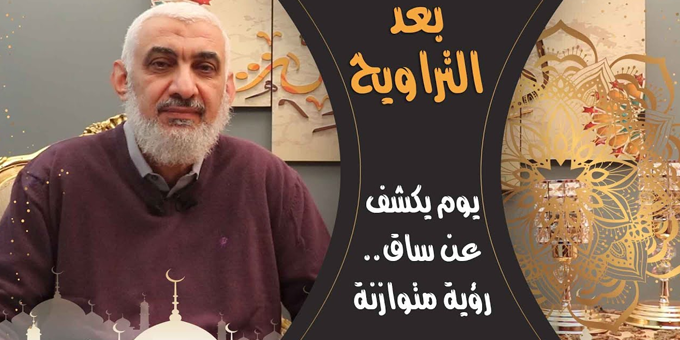
Read about Muslim contributions to humanities such as theology, literature, etc.

Muslims contributions to correcting faiths of former nations

Written by Dr. Ragheb Elsergany Thursday, 17 June 2010
Muslims have always made outstanding contributions on faith and religious conception. Before Islam, the world had a dark vision of the truth of divinity. There were deviations, superstitions, and polytheism even at the time of great philosophers, such as Aristotle. Polytheism dominated in India, Europe plunged into conflict between the religious and worldly authorities, polytheism spread among Arabs.
 

Muslims’ innovation of Sharia-related sciences

Written by Dr. Ragheb Elsergany Monday, 13 December 2010
Muslim nation has innovated purely Islamic sciences that other nations do not have. They include the science of hadith methodology, or others related to Prophet’s Sunnah in addition to al-Jarh & al-Ta'dil and al-Rijal (reporters of hadith) and their classification and foundations of Al-Fiqh.
   

Contributions of Muslim scholars to the development of science of history

Written by Dr. Ragheb Elsergany Sunday, 25 July 2010
History is an old science that began with the existence of the human society itself, while the science of Islamic history began with the emergence of Islam and the establishment of its state. It was marked by originality and independence. Muslims had diverse historical writing methods, involving books of Prophetical biography, the Messenger's battles, biographies and genealogies, classes, local histories and general histories.
 

Muslims’ innovation of sciences related to Arabic

Written by Dr. Ragheb Elsergany Monday, 13 December 2010
The Arabic language has many disciplines that were devised by the scientists of the Islamic civilization. These disciplines have kept the language vivid and mature as a language of an international civilization. These disciplines are the discipline of grammar, prosody, and writing dictionaries.
   

Religious conception in Islamic civilization

Written by Islamstory Tuesday, 20 July 2010
Vis-à-vis the illusions and superstitions of religious conception in former nations, we have the pure faith of monotheism in Islam, which was a gift that saved mankind. Islam has spread in the four corners of the globe with its tolerance, convincing argument, compliance with reason, and its great role in reforming society and building thought, which shows the greatness of Islamic civilization and its contributions to mankind.
 

Muslim scholars’ contributions to development of philosophy

Written by Dr. Ragheb Elsergany Thursday, 22 July 2010
Philosophy was one of the common sciences that people came to know before Islamic civilization. Muslim scholars learned about philosophy only after the spread of translation during the First Abbasid era. The stance taken by Muslims towards philosophy was one of opposition, moderation, or leniency. Great, genius philosophers, such as Al-Kindi (Alkindus), Al-Farabi (Alpharabius), Ibn Sina (Avicenna), and Ibn Rushd (Averroes), appeared and their marks still exist.
   

Tolerance and Humane Aspects of Muslim Civilisation

Written by Dr. Ragheb Elsergany Sunday, 01 November 2009
Muslims, as a minority in Western societies, have come under severe strain since September 11th, 2001, in particular.The Italian Prime Minister, just like the deceased Dutch right winger Pym Fortyn and scores more in their wake, have engaged in open diatribes against Islam, labeling it a faith of darkness, a negation to civilization and progress; intolerant and in-humane, and so on and so forth; a language reminiscent of that thrown at the faith in the 19th century just prior to, and in the wake of, the occupation of Islamic lands.
 

Contributions of Muslim scholars to the development of science of literature

Written by Dr. Ragheb Elsergany Tuesday, 03 August 2010
The Arabs took up the science of literature before the emergence of Islam, but did not learn it from others. Arabic literature is divided into poetry and prose. Poetry experienced major development stages in pre-Islamic period until the Abbasid era, and had varied purposes, while prose had varied examples of messages, proverbs, stories and maqamat (short stories and a genre of Arabic rhythmic prose).
   

Philosophy in Islamic Civilization

Written by Dr. Ragheb Elsergany Monday, 31 March 2008
Muslim philosophers were men of science who explored and set the very foundations of knowledge. They had great influence and importance in the history of fundamental ideas.
 

Ibn Khaldun innovating sociology

Written by Dr. Ragheb Elsergany Thursday, 05 August 2010
Muslims played a leading role in humanities and philosophical thinking. Sociology is considered evidence to the greatness of the Islamic civilization. Ibn Khaldun is seen as the father of this science and the one who wrote down its basics and theorities. He is best known for his Muqaddimah (known as Prolegomenon in the West); the book in which he presented all he had in mind about this new field.
   

History in Islamic Civilization

Written by Dr. Ragheb Elsergany Sunday, 30 March 2008
History, and the study of it, has existed as a highly respected science for literally centuries, and has managed to grow with the efforts of its scholars to envelop a broader range of considerations.
 

Education in Islamic Civilization

Written by Dr. Ragheb Elsergany Sunday, 30 March 2008
From the start, the mosque, Wardenburg explains, was the centre of the Islamic community, a place for prayer, meditation, religious instruction, political discussion, and a school. And anywhere Islam took hold, mosques were established, and basic instruction began.