Read about Muslim contributions to Science 

Science in Islam: Importance and Value

Written by Dr. Ragheb Elsergany Wednesday, 16 June 2010
Science has a great status in Islam to the extent that almost every chapter of the Holy Quran spoke about science, either directly or indirectly. Moreover, the first verse to be revealed in Quran was "Read". This had a far-reaching effect in the Islamic civilization, so it made innovations and provided humanity with abundant goodness and sublime values.
 

Status of Science in Islam and Christianity

Written by Islamstory Thursday, 15 July 2010
Science found a prestigious status in Islam, but in Christianity, it was categorically rejected so much so that scientists were fought and pursued. In the Middle Ages, the church was completely against science and this was the start of famous conflict between religion and science, thus making Europe live ages of straying and misleading.
   

Islam Keenness on and Encouragement of Science

Written by Islamstory Wednesday, 21 July 2010
Science in Islam is not monopolized by a certain person, but Islam adopts the slogan of “science for all”. Science (or knowledge) in Islam is a legitimate right enshrined to every Muslim, either male or female. However, science in falsified Christianity, was confined only to scientists, who lived in complete isolation while the masses were misled and lived in complete ignorance.
 

The Experimental Scientific Method.. Important Islamic Addition

Written by Dr. Ragheb Elsergany Tuesday, 27 July 2010
The experimental scientific method based on induction and sighting is considered a huge Islamic addition to the march of science worldwide. Pre-Islamic civilizations depended on theories not experiments. When Islam was revealed, it did not reject such theories, but added to them what was in the interest of humanity.
   

The practical side in Islamic civilization

Written by Dr. Ragheb Elsergany Monday, 02 August 2010
The practical side in Islamic civilization is one of its greatest achievements. Other civilizations relied on the theoretical side only, but Muslims turned every correct theory into a useful work.
 

Scientific teams in Islamic civilization

Written by Dr. Ragheb Elsergany Tuesday, 03 August 2010
Scientific teams are a new basis with which Muslims changed the way of thinking of former scientists. For the first time in history, Muslims formed an integrated scientific team that included more than a scientist specialized in more than a field. Sons of Musa ibn Shakir are the first scientific team in history. There was another team led by Al-Razi.
   

Respect for intellectual property in Islamic civilization

Written by Dr. Ragheb Elsergany Monday, 09 August 2010
Respect for intellectual property is a principle adopted by the Islamic civilization since ancient times. This principle was not known before Islam. It is to attribute an effort and discovery to its maker. Although Muslim scholars respect other people's property, they suffer plagiarism.
 

Qur’anic schools in Islamic civilization

Written by Dr. Ragheb Elsergany Thursday, 09 December 2010
Qur’anic schools are one of the oldest educational centers for Muslims, and were intended to teach children how to read, write and memorize the Qur’an. Muslim scholars tried through these schools to lay educational and psychological foundations in the education of children.
   

Curriculum in Quranic schools...Islamic precedence

Written by Dr. Ragheb Elsergany Wednesday, 15 June 2011
As Muslims were the first to innovate Qur’anic schools, they also had the lead in the innovation and development of curriculum in these schools. They knew the system of dividing subjects of study, and they allocated a specialized teacher in each subject.
 

Mosque and its role in the Islamic civilization

Written by Dr. Ragheb Elsergany Thursday, 09 December 2010
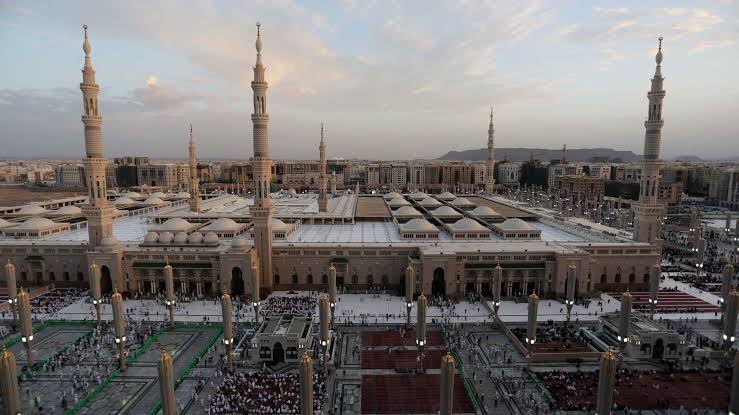
Mosque is the main basis of the renaissance of the nation. It was the first place of education and the main center for spreading the Islamic culture. Education in mosques has had to do with learning sessions since the era of Prophet’s companions until the era of the Umayyads and the Abbasids.
   

Most famous mosques in Islamic civilization

Written by Dr. Ragheb Elsergany Thursday, 09 December 2010
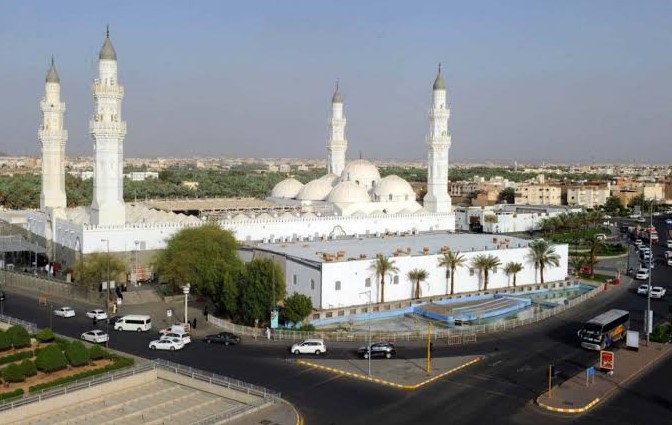
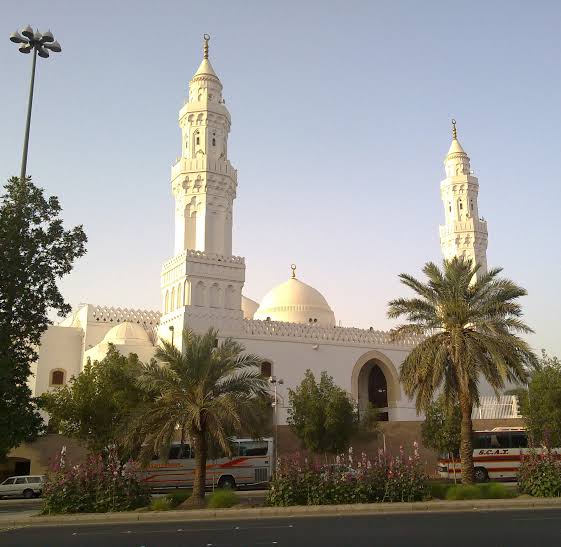
The Islamic civilization has built a series of great mosques, which were a scientific beacon that rarely existed in other civilizations. These mosques were global universities. These mosques include the Umayyad Mosque, Amr ibn Al-As Mosque, Al-Azhar Mosque, Al-Zaytunah Mosque and Al-Qarawiyyin Mosque.
 

Schools in Islamic Mashreq

Written by Dr. Ragheb Elsergany Sunday, 12 December 2010
The Islamic civilization has known system of schools since the fifth Hijri century. Schools spread in the Islamic world. They were civil in the beginning, but later the institution of governance and Caliphate established and managed them. Study in these schools was not confined to religious sciences, but also included life sciences.
   

Schools in Morocco and Andalusia

Written by Dr. Ragheb Elsergany Thursday, 30 December 2010
Islamic schools were wide spread in the Arab Mashreq (East) and Maghreb (West). Caliphs in Andalusia were interested in education. The city of Cordoba became a beacon of knowledge in the world. Colleges were established in Granada, Toledo, Seville, Murcia, Almería, Valencia and Cadiz
 

Schools in the Mamluk era ... specialization and reliability

Written by Dr. Ragheb Elsergany Sunday, 12 December 2010
The Mamluk reign was one of the most famous Islamic eras that paid great attention to building schools. Mamluk sultans vied for building schools.
   

Libraries in the Islamic civilization... Diversity and progress

Written by Dr. Ragheb Elsergany Sunday, 12 December 2010
Several types of libraries have been known in the Islamic civilization, a phenomenon that had never been witnessed in any other civilization.  
 

Library of Baghdad, An advanced international university

Written by Dr. Ragheb Elsergany Sunday, 12 December 2010
Library of Baghdad was one of the most famous scientific libraries in history. It was tantamount to an international scientific university, in which students of different races from the East and the West used to study various disciplines of science in multiple languages.
   

Scientific sections in the Library of Baghdad

Written by Dr. Ragheb Elsergany Thursday, 09 December 2010
The multiple sections of the library of Baghdad confirm the fact that this library was tantamount to a giant developed university. There was a section for translation, especially after missions had been sent to different countries to bring books.
 

Management of the Library of Baghdad

Written by Dr. Ragheb Elsergany Thursday, 09 December 2010
A number of scholarly managers succeeded the management of the Library of Baghdad. A manager was called Sahib Bayt al-Hikmah (i.e. the chief of the House of Wisdom). The first manager was Sahl ibn Harun.
   

The family role in the education of children in the Islamic civilization

Written by Dr. Ragheb Elsergany Thursday, 09 December 2010
Throughout history we find renowned Islamic scholars, such as al-Shafi`y, Sufyan al-Thawry and others, who were the product of strenuous education efforts exerted by their mothers or families.
 

The journey to seek knowledge... impressive stories

Written by Dr. Ragheb Elsergany Thursday, 09 December 2010
Islamic civilization has raised her children on the necessity to seek knowledge, whatever its source is and wherever its place is. Knowledge is neither limited by the borders of a certain country nor confined to a certain sheikh.
   

Page 1 of 2